Avery Jakovic, Reporter
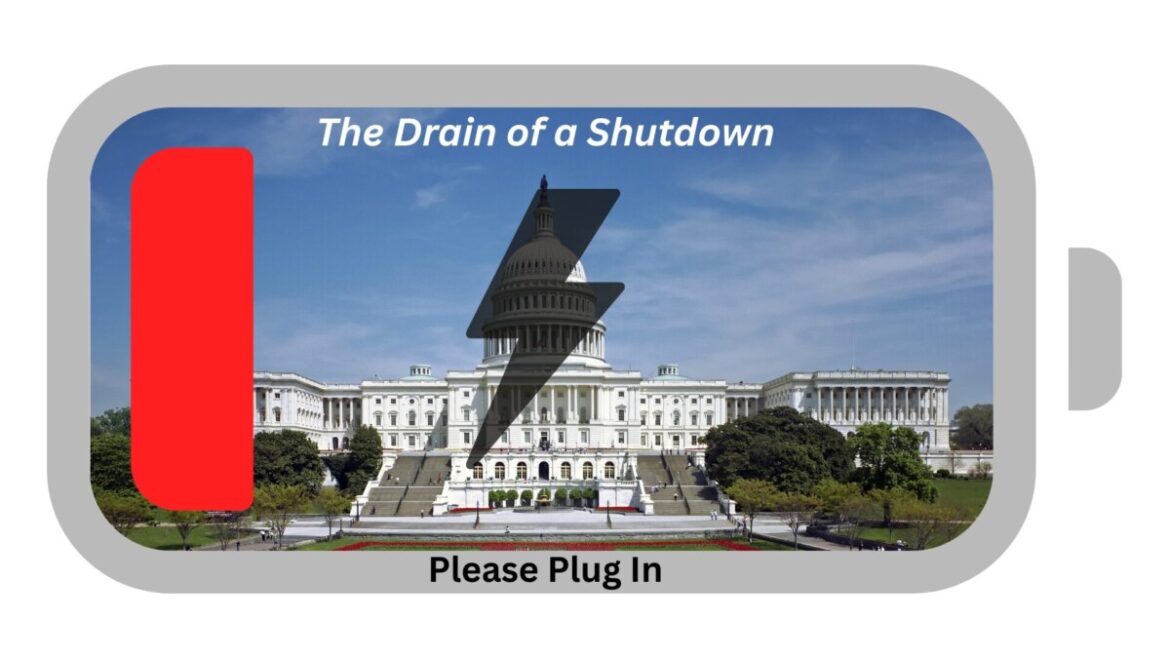
Graphic by Graham Jackson
What happens to real people when politicians play with their lives? Every morning, Lisa Jakovic — an FBI employee required to work without pay — walked into the office as if nothing was wrong. But at home, she was delaying house projects, having second thoughts about purchases, and wondering when her next paycheck would come. I won’t hide that I’m her stepdaughter — lovingly labeled her bonus daughter — because the shutdown’s impact wasn’t abstract for my family. As the government shutdown became the longest in US history, thousands of essential workers like Lisa reported rising stress, mounting bills, and a growing sense of feeling trapped in a political game.
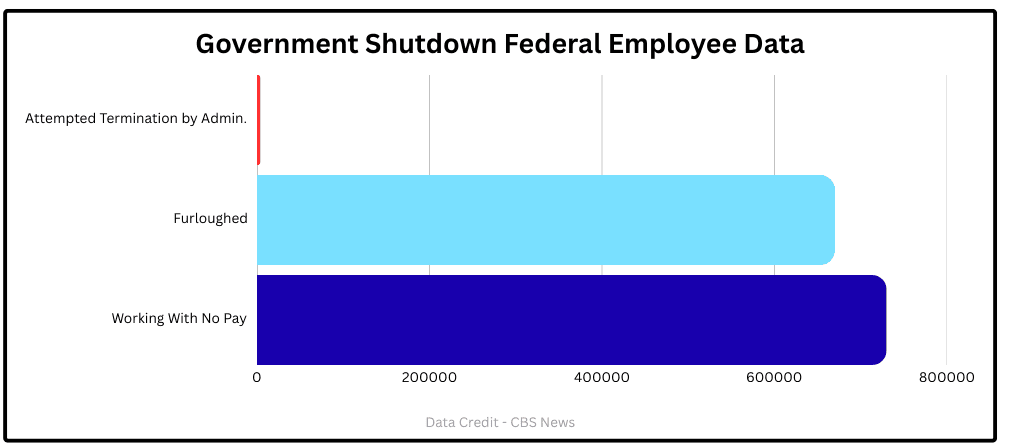
“My frustration is in a lot of ways, it’s not only personally, but it’s financially, it’s mentally, it’s not knowing what’s going to happen. There doesn’t seem to be any end in sight. And honestly, it just seems like a bunch of politicians playing with your life and they’re using you as pawns.” Lisa is one of the hundreds of thousands of federal employees deemed essential during the shutdown. Across the country, many government employees were furloughed or deemed essential, continuing to work without pay as Congress stalled on a funding agreement. While furloughed workers were told to stay home, she was expected to continue working indefinitely without a clear idea of when she would next be paid.
“I’ve always been considered an essential. I’ve always had to go into work. I’ve never been considered a non-essential and sent home… This is the first year they’ve made every single employee an essential employee, which means everybody has to come into work and not get paid.” Not every job in the FBI has always been considered essential. However, you cannot have a job in the FBI without a security clearance. Lisa, a Personnel Security Specialist, reviews applications for those who apply to work in the FBI, vetting applicants to make sure they meet the basic qualifications for a security clearance. This job is essential for the FBI, ensuring things keep running smoothly and that applications continue to be sorted through.
“We’ve put off projects for the house because of this. We went from a two income family to a one income family. You don’t know if you have any discretionary money, so all of my spending is strictly for the household. I still spend over $200 in groceries when I go grocery shopping every week.” For Lisa, who has worked in government for years, the shutdown was more than a headline — it was a disruption to her daily life. Living on one income caused financial anxiety to build up. She delayed household projects due to uncertainty of when pay would resume, cutting back on expenses where she could.
“You ask people to work and you’re not paying them. When you do pay them, you end up paying them in a lump sum, and now we get taxed more off of a bigger dollar amount. So, now they’re taking more money out of your paycheck and we’re being offered nothing.” As the days stretched on, she planned around not knowing when her next paycheck would come. Despite the fact that grocery trips were planned more carefully and bills were paid strategically, her finances were still affected. The shutdown shook the very rhythm of our household.
“Like I said, the bills still come in and then your credit gets affected because you’re not paying bills on time… all for the fact that we’re being pawned because of politicians not getting along and doing their job. People need to make the people that they voted for accountable.” Lisa continued to show up to work, but she admitted that it wasn’t hard to feel forgotten. Her words reveal a deeper frustration among government employees caught in the middle of political gridlock — people whose sense of duty clashes with a growing sense of dissatisfaction. The shutdown felt like a political game, and it’s important that voters hold officials accountable in the future. Workers felt used as pawns, largely lowering worker morale.
“The Department of Justice is the overarching parent company of the FBI, ATF and DEA. Those three organizations have what we consider 1811 series. Those are the people who are gun toting. They’re paying them funds now, and that money’s gonna run out if this continues.” The shutdown threw a harsh spotlight on what it means to be called essential. The government continued paying 1811s, some of that money made available from the Big Beautiful Bill — a U.S. federal statute containing tax and spending policies. Paying them with money that was bound to run out at some point. With some being paid and others not, a rift between employees and the government widened. The title of ‘essential’ began to feel hollow, and that frustration mixed with a sense of dissatisfaction about how government workers are treated.
“We’re getting nothing and being told to do something… how do you get the word to the people who are in office that we are not happy with the job you’re doing? How do you get that?” Even though she’s now working with pay since the government resumed regular function, there’s still a quiet frustration. The thought of all the stress that employees went through behind the scenes lies at the forefront of many of their minds. But there’s no time to dwell on that, as there’s always work to be done.
“People such as myself don’t come in here for the money, people come in for two reasons. They either come in for power, which is not me, or they come in because they want to make a difference.” As Lisa said, public servants don’t do the job for the money. But they still need an income to live. The public didn’t realize the severity of the impact of the shutdown for government employees, though. Beyond pay, many people that Lisa spoke to didn’t even realize that she was still reporting into work.
“I don’t think the public in general understands. I think the only way the public in general is going to understand is when it affects them. When air traffic controllers or TSA walks off on the job and somebody can’t make a flight, and they don’t work for the government, they will then finally understand what’s going on.” A point that she makes is that people will only care when they’re personally affected, and it’s so incredibly important to care about the shutdown. Yes, the shutdown is over, but so many government employees were—and still are—impacted.
“It’s a thankless job. Say someone doesn’t pick up the trash. Somebody’s going to get upset.” Between lowered credit scores, stress and mental strain, and even programs for vulnerable families being affected, the aftermath of the shutdown goes far beyond annoyance and dissatisfaction. Society generally only notices the severity of issues when something stops working for them, but the impact of the government shutdown should be known by all. Government workers are driven by service, not money, but they’re often the first to be impacted by events like shutdowns. Shutdowns don’t punish politicians — they punish the people holding the system together.