
Valentina Fuentes, Story Editor
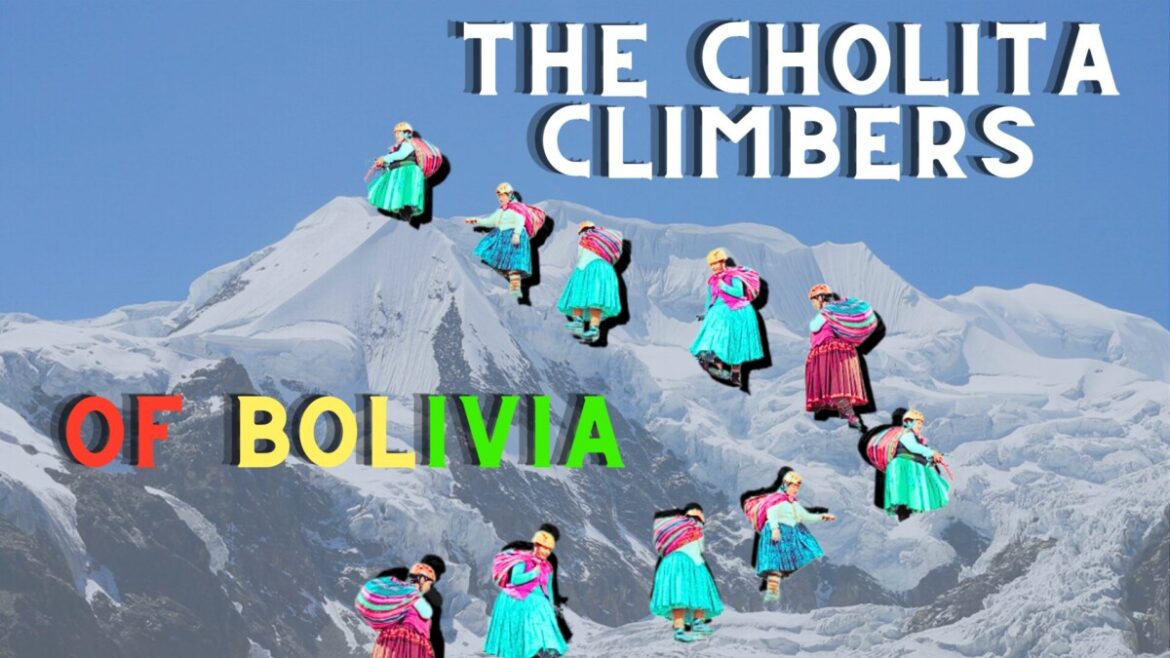
The Cholita outfit. This particular Bolivian attire consists of colorful pollera skirts ensembled in pattern, dark bowler hats, a vibrant Iliclla or shawl, and two long black braids that fall past their back. This is the traditional outfit of Cholitas, indigenous women that decorate the streets of Bolivia in large vibrant communities.
The definition of Cholita refers to a woman of indigenous Andean descent, primarily Aymaran and Quechuan. Today, the word “Cholita” stands as one of the most recognizable symbols of Bolivian culture and strength, but it has not always been that way. For decades, Cholitas faced unfathomable discrimination within Bolivian society. It was a common occurrence for Cholitas to be excluded from participation in workspaces and leadership, as they were seen as less than men.
The dismissal didn’t end in the workplace. Indigenous women wearing traditional pollera skirts were denied entry to restaurants, excluded from affluent parts of cities like La Paz, and often marginalized, perceived as a servant class, rooting from the harsh colonial history of Bolivia. This unfortunately lasted for decades, with a major shift finally occurring after the 2009 Bolivian Constitution advancements under President Evo Morales, the first ever indigenous president in the history of Bolivia.
Despite this challenging history, Cholitas have shaped their place in Bolivian society and have become one of the most prominent symbols of Bolivian culture. Today, Cholitas make up entrepreneurs, activists, writers, artists and even professional wrestlers, known as Cholita luchadoras, all these roles challenging the stereotypes they faced for centuries.
Among these roles, one group of cholitas have begun redefining expectations in a completely different area: mountain climbing.
Recently, these Cholita Climbers accomplished something exceptional: they have rewritten their narrative entirely. Historically, indigenous women in Bolivia primarily worked as cooks for mountaineering expeditions, preparing meals and managing supplies while their husbands worked as mountain guides, similar to the sherpas of Mount Everest. But, as time went on, these women began to build their own mountaineering crew, to divert from their prior gender roles.
Founded by Cecilia Llusco Alaña, an Aymaran woman, an 11 person group of women from the same origin placed mountaineering as their task. Their first major ascent took place in 2015, where they successfully reached the summit of Huayna Potosí. Located near the capital of La Paz, this mountain reached a 6,088 meter tall peak, one of the most popular peaks of Bolivia, which marked a milestone for this group of females. Despite being such an immense feat, there was a particular facet within this expedition other than the climb itself that made it truly remarkable: the fact that every Cholita who participated wore their traditional pollera skirts and shawls, reflecting their culture and their undeniable fervor for accomplishment.
Since that initial ascent, this climbing group of women have continued to achieve triumphs. They have surmounted an immense variation of notable summits, including mountains such as Acotango, Sajama, Illimani, Parinacota, and Pomarapi, all peaking at over 6,000 meters, and all located in Bolivia. These women have also extended to areas outside of Bolivia, traveling to Argentina to summit Aconcagua in 2019, where its peak stands at an outstanding 7,000m. Their expeditions have gained international media coverage, having been highlighted by The Guardian, National Geographic, UNESCO, Reuters and BBC. They even had an incredible documentary made about them in 2019, titled “Cholitas.”
This global attention is thoroughly deserved, especially considering the extreme difficulty of climbing mountains. These women face sharp air, freezing temperatures, rugged landscape and oxygen levels so low that a regular person would need to use an oxygen mask, yet Cholitas take on mountains without such aid, fueled solely by their fervor to achieve.
The impact of their climbs go far beyond the mountains they scale. By achieving these feats that were traditionally dominated by men and international tourists, Cholitas have demonstrated the capacity of indigenous women in a multitude of spaces where they have been historically excluded from.
Today, the Cholita Climbers have gained recognition not only for their great athletic accomplishments of climbing mountains but also for the powerful message they carry: Indigenous women in Bolivia should be recognized for their successes and no longer be marginalized or underestimated within society.
During Women’s History Month, stories like theirs remind us that women’s achievements appear in all places and in all forms. This month of March, people should aim to highlight the achievements of women everywhere, and celebrate all of their accomplishments that have made society into what it is today.