

Emily Telesco, Editor-in-Chief
On my journey of watching as many Oscar-nominated films as I can, I recently saw Hamnet in theaters a few weeks ago. Adapted from the book by Maggie O’Farrell and directed by Chloé Zhao, I’d been wanting to see this film for a while – having heard nothing but praise. Somehow, it still exceeded every expectation I had. It was both devastating and beautiful in equal measure. So heartbreaking, in fact, that as my own tears slipped down my face, I could hear quiet sniffling around me during moments of silence. Even after stepping out into the freezing winter night, I still felt deeply absorbed by the devastating story I had just watched unfold.
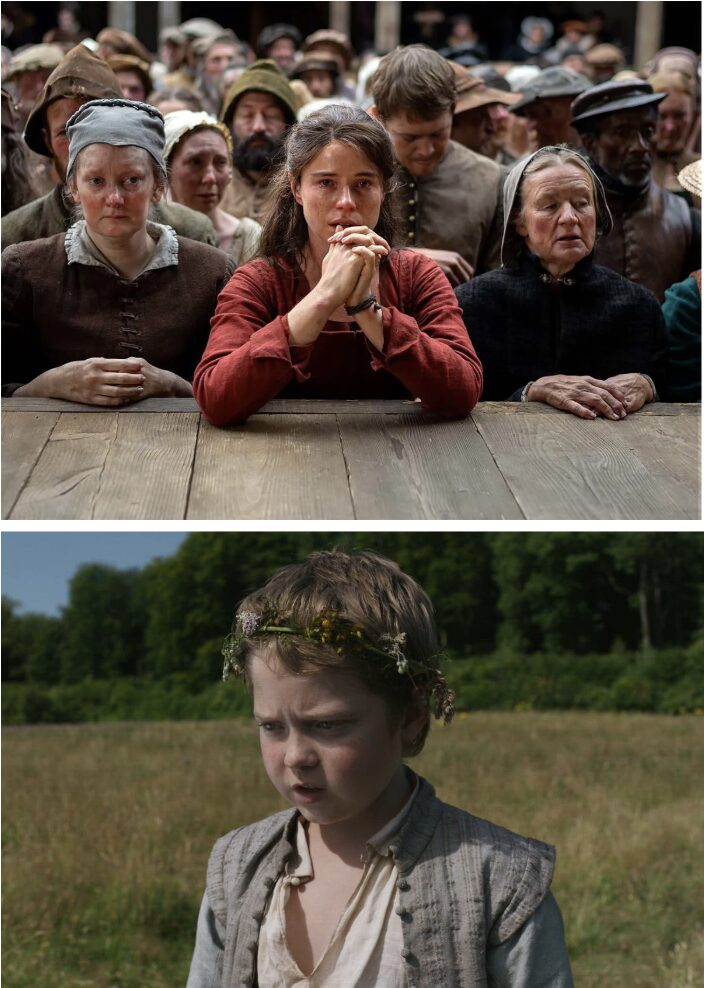
Aside from the film being visually stunning and having a tear-jerking soundtrack, the main reason for my emotion was the incredible performances by all actors. Specifically, Jesse Buckley as Agnes Shakespeare blew me away. Every small expression, big emotion, and silent pause felt so deeply raw and human – I am certain she’s winning that Oscar for Best Actress. Also, Jacobi Jupe’s portrayal of Hamnet was so impressive to me – he captured a vulnerability and emotional depth that felt almost unreal for someone so young.
Grief, obviously, is a big theme in Hamnet. Without completely spoiling the film, it centers on the real-life story of Shakespeare’s son Hamnet, who died when he was only 11. It presents all forms of grief throughout – the deep internal guilt, the distance it can cause with loved ones, how time keeps moving on even if you don’t want it to. But, what I found most interesting about the film was that its representation of grief wasn’t overly dramatized – it felt very real and relatable.
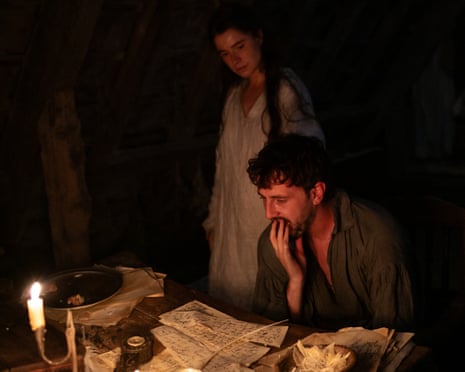
One of the biggest lessons the film teaches us about grief is that it is not shared evenly. Shakespeare’s wife Agnes’ grief for her son is more physical – she carries an immense weight of sadness and guilt within her. We see it slowly take its toll as she sits in the stillness of her home, frozen in place while the life around her quietly continues on. Meanwhile, Shakespeare deals with grief by distancing himself – surrounding himself with work in London and only returning home to his family occasionally. The famous “To be or not to be” soliloquy that Paul Mescal (as Shakespeare) delivers on the dock while in London felt especially haunting in this context. The words, originally spoken by Hamlet as he contemplates life and death, now represented the confession of a father who is contemplating how to confront his grief. Watching this scene acted out, I felt I was able to really understand and interpret Shakespeare’s language for the first time.
Ultimately, Agnes and William’s growing tension caused by the loss of their son finds a resolution in the final scene, in which Agnes watches her husband’s production of Hamlet. This was easily one of the most powerful moments of the film. Standing right next to the stage, surrounded by a crowd of strangers, she watches as the actor for Hamlet delivers a final monologue as he dies. Suddenly, there is a shift as she reaches out to him – she doesn’t see the actor anymore, but her son. As the audience around her mirrors her gesture, we see a moment of profound connection – a sense of shared grief. It is the moment Agnes realized Hamnet would not just fade into the past, but would be immortalized and remembered forever.
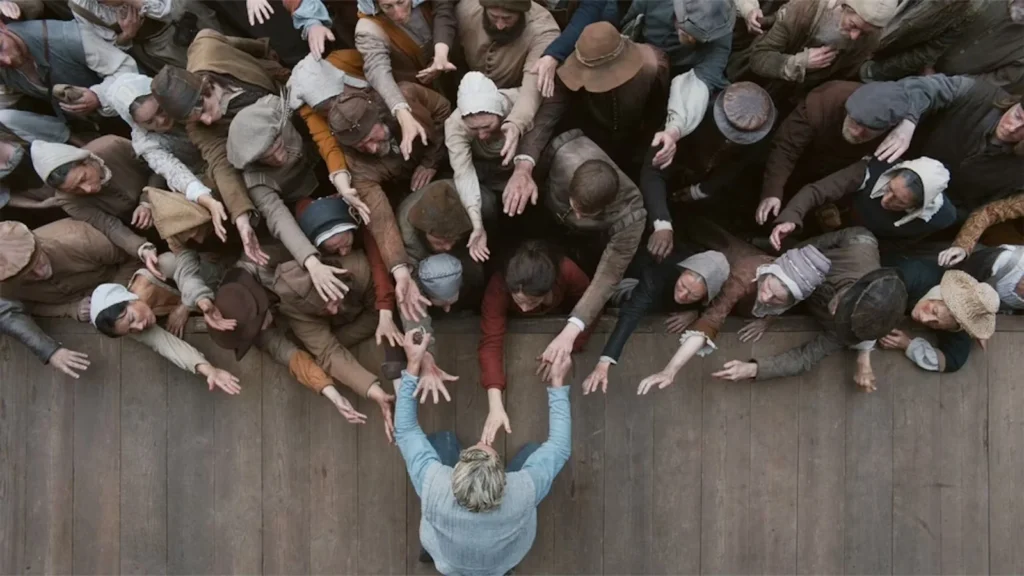
What made this ending so moving was that there wasn’t an obvious consolation. Agnes knows Hamnet is gone, but she also knows his life will forever become embedded in every performance and appreciated by every audience. She is offered a quiet consolation. More generally, this final scene teaches us how grief evolves and is meant to be carried and offered to the world in a new form.
Hamnet emphasizes that grief is not something to overcome, but something to carry with us. It’s complicated. It can create distance. It can silence us. But, it’s also proof of love and true understanding. So whether through art, stories, or special traditions, the love that is born out of grief can find a way to endure.