Leah Granskog, Story Editor
Graphic by Leah Granskog
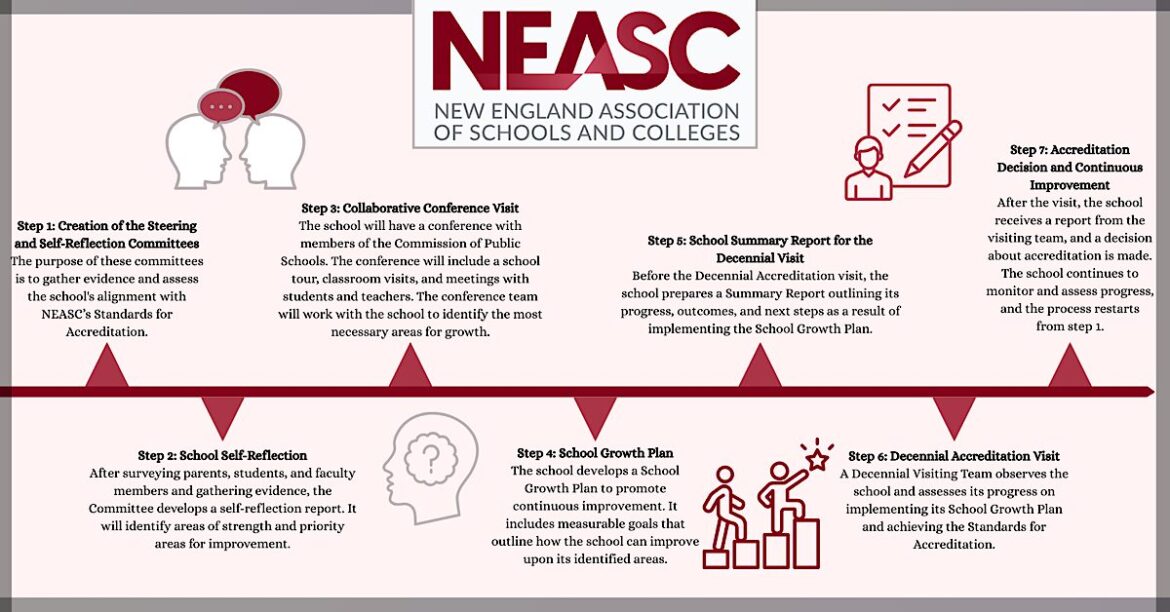
From March 16-18, the New England Association of Schools and Colleges (NEASC) will conduct its 10-year accreditation visit for NCHS. During this visit, a committee of trained reviewers will spend time in classrooms and talk with students, administrators and parents. They will use their observations to create a report evaluating how NCHS meets the five core standards that NEASC has identified as “nonnegotiables” for every public school in the region. These five standards are Learning Culture, Student Learning, Professional Practices, Learning Support, and Resources.
This 10-year cyclical process for accreditation started with identifying areas the school wanted to improve upon. “We had a Collaborative Conference with NEASC two years ago, which was designed to help us identify what our priority areas for growth are,” said the Science Department Chair and Co-Chair of the NEASC Accreditation Steering Committee, Michael LeDuc. “So, we spent the last few years working toward growth in those areas. When they come back this spring, they’re going to be looking to see how we’ve grown in those areas and what steps we’ve taken to improve.”
According to Math Department Chair and Co-Chair of the NEASC Accreditation Steering Committee, Becky Pavia, the Committee has decided on three areas to concentrate on for this cycle. This decision followed an extensive process of reading the NEASC standards and writing a report. “We decided to focus on curriculum, Portrait of a Graduate and student wellbeing,” she said.
To target curriculum, numerous changes have been made in how students are taught in order to improve. “We wanted to make sure we had a common format for all of the curriculum, and I believe that now we have that,” NCHS Principal Bill Egan said. “Additionally, we tried to ensure the Portrait of the Graduate is more embedded into the curriculum.”
While these curriculum changes may be small, Ms. Pavia thinks they will still impact students. “It’s a bit of a shift in how we assess and instruct students in the class that students may notice coming up in different places,” she said.
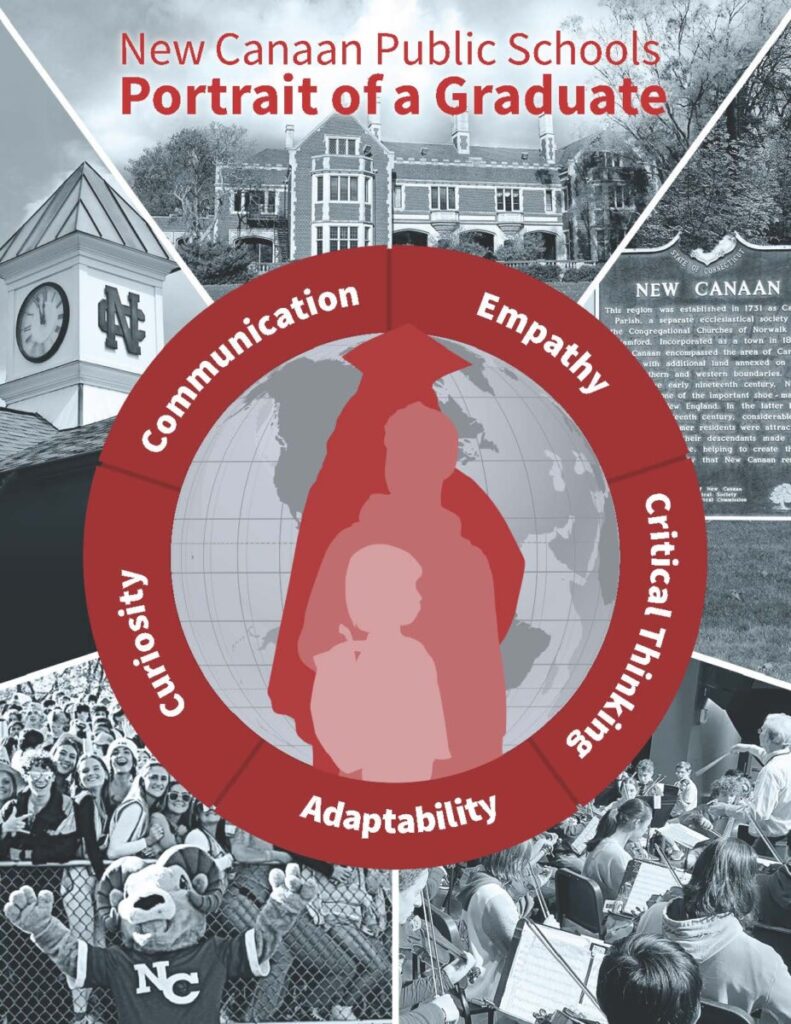
The Portrait of a Graduate, another of the three target areas, is a relatively new initiative that has been implemented at NCHS. This project was created in 2023 by NCHS educators, Board of Education members, students and families. The purpose of this creation is to define essential competencies that all students should have developed by their time of graduation. These competencies are communication, critical thinking, empathy, curiosity, and adaptability.
According to Mr. Egan, for students, having the skills outlined by the Portrait of a Graduate is just as important as performing well academically. “I think our students are awesome, and they care deeply about their grades,” Mr. Egan said. “While that’s important, the skills of the Portrait of a Graduate are transferable to life. If you can communicate, if you’re empathetic, if you’re curious, if you can critically think – all of those elements are what are going to make you successful in life.”
To demonstrate this Portrait of a Graduate initiative, seniors will attend student-led conferences on the morning of March 17. According to Mr. LeDuc, even though these conferences have the same requirements as the previous Master Based Diploma Portfolio Reflection that seniors would complete, it will now be in a presentation format. “They will still talk about their growth over time, but now they’ll be presenting to faculty members,” Mr. LeDuc said. “This will happen during the NEASC visit.”
“I hope they see that we are more than just a transcript.”
Bill egan, nchs principal
As for the structure of these conferences, seniors will be presenting some of the best work they’ve produced during their time at NCHS. “They are going to go through three different artifacts that they found to be really foundational to their success,” Mr. Egan said. “It could be anything. We will then take a look at how the competencies of the Portrait of the Graduate are embedded in what the student talks about.”
As for the last area of focus, student wellness, Mr. LeDuc explains how many student-centered changes have been made over the past few years to improve our performance in this category. “A lot of the big policy shifts that have happened in the last few years are associated with student wellness,” he said. “Some examples are the speakers that have come in, the cell phone policy and the midterm and final exam schedules. Even the frequent communications from Mr. Egan about all of the support systems that we have available to students, like therapy dogs during finals or the extra school counselor and social worker we added in the last year, are examples of us trying to improve student wellness.”
Aside from hoping we “meet standard” in all of the areas that NEASC is evaluating, Mr. Egan hopes the NEASC Committee leaves with an improved understanding of NCHS culture and student life. “I hope they see that we are more than just a transcript,” Mr. Egan said. “We have some amazing students here who are talented, but they are also kind and they work hard.”
After their visit, the NEASC Committee will give the school its evaluation report and help to decide the next steps. “They’ll do a debrief with us before they leave, and we’ll get an idea of what feedback they have,” Mr. LeDuc said. “We have a school improvement plan, and we have goals moving forward. They’ll help to refine and shape those.”
Mr. Egan believes this visit has purposes beyond accreditation. “It’s an exciting thing for us to be able to show our students off,” he said. “To me, the visit is more than just a visit. It’s a celebration of our school.”
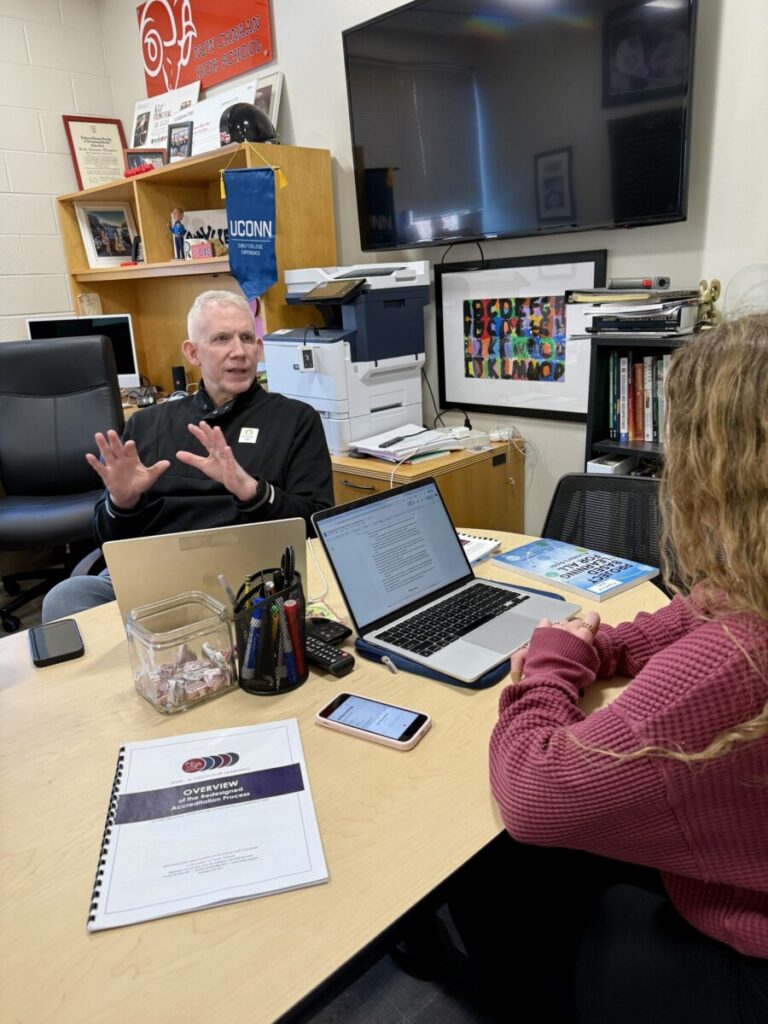
Photo by Matt Sisser