Emily Telesco, Editor-in-Chief
Graphic by Emily Telesco
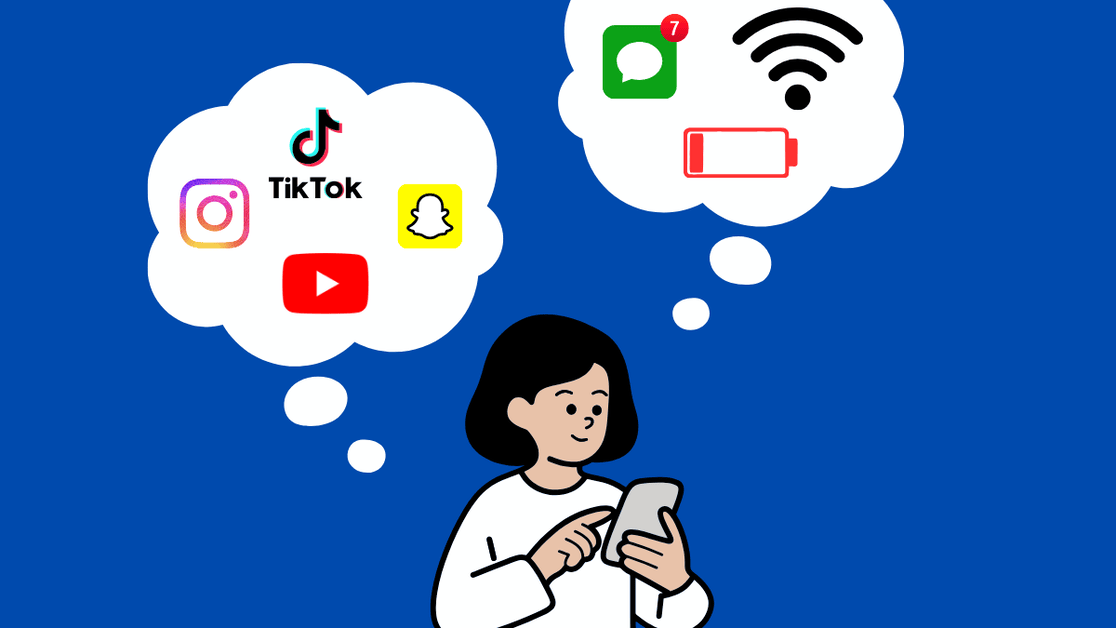
Doomscrolling. It’s a predicament we all find ourselves in at some point, whether we wish to acknowledge the fact or not. Mindlessly moving our thumbs, our faces illuminated by a bright screen as we stare at video after video, inadvertently becoming fluent in new trends and useless language. Though seemingly harmless, this simple action can develop into something much bigger. It’s called being “chronically online”, and it’s an issue that actually shapes the way Gen Z engages with the world around them.
Humans crave connection, and we achieve this by being online. Through social media like Instagram, TikTok or Snapchat, we develop a sense of connection with the creators we’re watching, bringing us temporary relief from the stress of the real world. And while Gen Z recognizes the value of in-person interactions, most still prefer this digital connection through text and social media.
Even so, we are very much aware of this issue. According to Impact 360 Institute, 85% of Gen Z agrees that their generation spends too much time online. But, awareness doesn’t necessarily lead to change – knowing you’re online too much doesn’t magically make the apps less addictive.
What makes this issue even worse is how normalized it’s become. Being chronically online is now a personality trait that people joke about, and we seemingly bond over the niche references and microtrends that come and go from our feeds. People feel pride in being able to detect specific references or trends from social media and pop culture – or in being more “online” than someone else. Although it can feel funny in the moment, it also traps us in a constant loop of comparison and information overload.
The toll that being online takes on teens is one they may not notice. The beauty of online escapism means that we’re able to venture into another world of people’s seemingly perfect lives or other situations happening across the world, and can simultaneously forget about our own struggles. However, if not controlled, this can actually lead to many problems – the first being social isolation. According to Clear Behavioral Health, being online can actually make it difficult for people to foster meaningful relationships with family or friends. This creates a disconnect from real life, leaving them isolated. Additionally, being constantly immersed in other people’s experiences and sometimes devastating situations can leave people with a variety of other mental health disorders, including anxiety, depression and self-esteem issues.
Still, I’m not saying to throw away your phone and “touch grass.” Social media has it’s positives, and does connect us in meaningful ways. It gives people communities they may never find offline and it spreads information fast, educating people on news and other current events. It can also be a creative and genuinely uplifting environment where people are able to openly express themselves. The real problem lies in our ability to balance the digital world with the rush of real life.
So, what can we do about it? The solution isn’t as dramatic as deleting every app or getting rid of your phone entirely. For most of us, that’s extremely unrealistic. But, building small boundaries can make a huge difference. Setting time limits, turning off notifications for specific apps, or even keeping your phone out of reach while doing work helps break the habit of constantly checking your screen. It doesn’t eliminate social media, but it creates a healthier relationship with it – one where you’re choosing to be online rather than falling into it. Additionally, it’s important to create moments of real-life connection: spending time outside with a friend, reading, or even journaling can be refreshing and genuinely grounding.
Ultimately, being chronically online isn’t Gen Z’s failure, but simply a result of the digital world we’ve grown up in. However, recognizing its impact gives us the power to find a balance, one where we are able to enjoy being online while still maintaining real-world connections and relationships. It’s in that balance that we can live healthier, more fulfilling lives.