
Olivia Carofano, Editor-in-Chief
“Everyone has the right to education. Education shall be free… shall be directed to the full development of the human personality and to the strengthening of respect for human rights and fundamental freedoms. It shall promote understanding, tolerance and friendship among all nations, racial or religious groups.”
— Universal Declaration of Human Rights (Article 26.1–2)
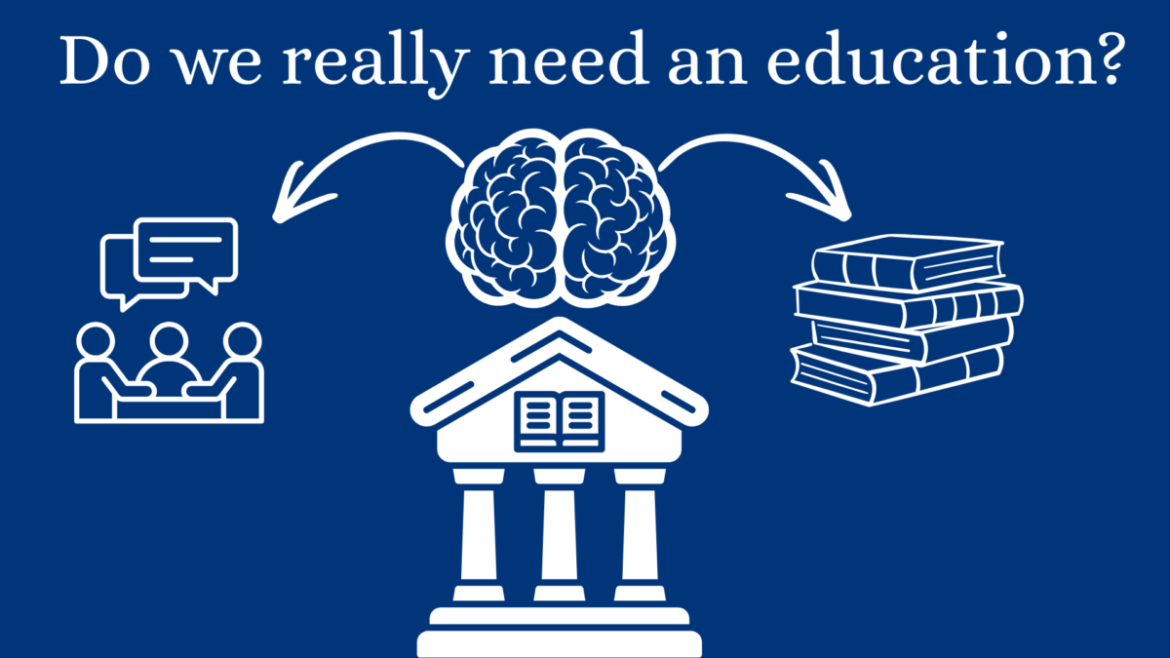
As a signatory to the United Nation’s Universal Declaration of Human Rights, the United States formally affirmed the principle that education is a fundamental right for all. In the U.S., this commitment has been advanced through the Department of Education, whose primary mission is “to foster educational excellence and ensure equal access” (U.S. Department of Education). Having an education is something that has the capacity to shape individuals, communities, and even nations. In the United States, the Department of Education exists as a key institution responsible for turning this principle into practice by promoting educational access, enforcing protections, and supporting students across the country.
The right to education allows individuals to participate fully in society. Through education, people gain the ability to think critically, evaluate information, and understand perspectives beyond their own experiences. These skills are essential in a democratic system where citizens are expected to vote, engage in public debate, and hold leaders accountable. Education also plays a crucial role in helping individuals develop empathy and respect for others, particularly in a diverse society. When people are exposed to different cultures and viewpoints, they are better equipped to challenge prejudice and build understanding rather than create division and polarization.
Further, education is not simply about gaining knowledge for economic success and financial stability, it allows individuals to understand their rights and responsibilities. An educated population is more likely to recognize injustice, advocate for change, and contribute positively to their communities; when access to education is restricted or weakened, individuals lose these opportunities for growth, and society loses the benefits of an informed and engaged population. Over time, this weakens democratic institutions and creates conditions where inequality and misinformation prosper.
Recent discussions surrounding the potential dismantling of the U.S. The Department of Education raises serious concerns about the future of education in the United States. While these proposals are framed as efforts to reduce government involvement or increase local control, their consequences could have a lasting impact on all people. Without strong federal oversight, educational access would likely become unequal, meaning that student opportunities would be determined by where they live and the wealth in their communities. This shift would undermine the idea that all students deserve a fair chance to educate themselves and ultimately succeed.
One of the Department of Education’s most important roles is addressing systemic inequality within the public school system. Many schools in low-income communities face persistent challenges, including overcrowded classrooms, outdated textbooks, limited access to technology, and insufficient counseling and mental health resources. These conditions are not the result of a lack of effort from school systems, it stems from local property taxes and a system that benefits wealthier districts while leaving others underfunded.
Programs such as Title I play a crucial role in directing federal funds to schools that serve students from low-income families. While these programs do not eliminate this idea of inequality entirely, they provide essential resources that help schools offer additional academic support, improve facilities, and hire specialized staff. Without these programs, many schools would struggle to meet even basic educational needs, further limiting students’ opportunities.
In addition to addressing an imbalance or unfair funding, the Department of Education plays a vital role in protecting students’ civil rights. Through enforcement of federal laws, the department works to prevent discrimination based on race, gender, disability, and cultural background. For students with disabilities, the department enforces the Individuals with Disabilities Education Act, ensuring that schools provide appropriate accommodations and services to all students that need it. This allows students who may have a learning difference or need an accommodation like extra time to thrive in school and achieve academic excellence just like everyone else.
Federal oversight is also important for protecting students’ identities and backgrounds. For LGBTQ+ students and students of color, the Department of Education provides further accountability when local policies or school leadership falls short of creating an inclusive environment. Without this oversight, many students would have little to no way to challenge unfair treatment or stand up for themselves.
College is another area where the Department of Education has a significant impact. As the cost of college continues to rise, access to federal financial aid has become essential for millions of students. Programs such as Pell Grants help make higher education attainable for students from low-income families, while federal student loan programs allow many others to pursue degrees that would normally be financially out of reach. Oversight of these programs also helps protect students from predatory practices by for-profit institutions that prioritize profit over educational quality. The long-term consequences of limiting access to higher education are significant; when fewer individuals are able to pursue postsecondary education, financial stability or growth declines, the workforce slows, and social inequality emerges or deepens. Education is one of the most reliable pathways to progress and growth not only for success but for the development of the whole person. When we restrict access to this basic fundamental right, we lose the promise of equal opportunity.
Overall, the Department of Education exists to ensure that students are not limited by where they live or by the resources available to their families or communities. Its mission is grounded in the belief that every student deserves a fair chance at success, regardless of background, economic circumstances, or identity. By setting national standards, providing federal support, and enforcing civil rights protections, the department works to reduce the gaps that would otherwise widen between students from different regions and socioeconomic conditions.
When executive efforts seek to weaken or eliminate this institution, the consequences extend far beyond changes in government structure or administrative authority. These decisions directly affect which students receive support, whose needs are prioritized, and who is not receiving basic and necessary support. Without a strong federal commitment to education, access and opportunity become increasingly unequal, allowing wealth, geography, and politics to determine the quality of a student’s education. In this way, the future of education slowly deteriorates instead of being shared.
Education must be treated as a critical foundation of society because it shapes not only individual lives, but the direction of the nation as a whole. Who we educate, and how we educate them, determines who has the power to participate in society and guide future generations. Protecting equal access to education is therefore essential to preserving democracy itself. A society that invests in education invests in informed citizens, shared opportunity, and the long-term strength and growth of democratic values.