Valentina Baldini, Editor-in-Chief
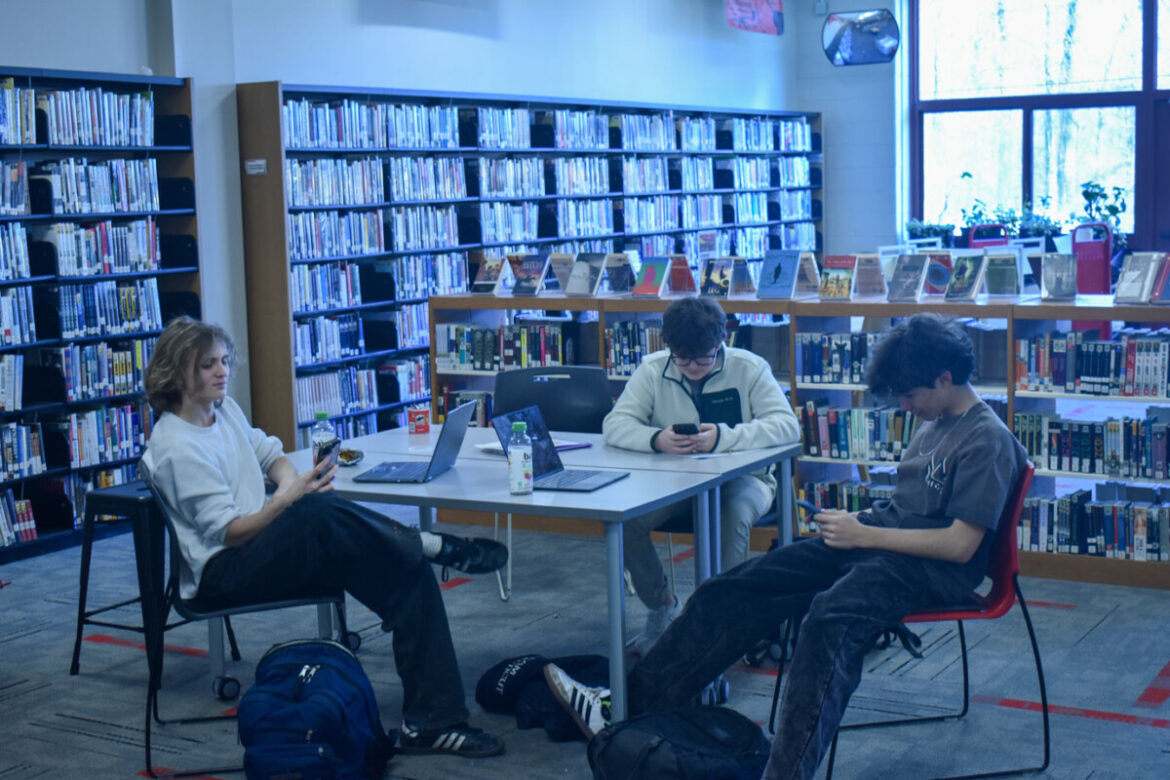
Photo by Matthew Sisser
Starting second semester, a series of phone policies will take place at NCHS prohibiting students from using their cellular devices in most areas of the school. Currently, all social media and artificial intelligence apps, like ChatGPT, have been banned on the school wifi, stopping students from getting distracted and using them during class.
For the last few years, NCHS has used phone caddies in every classroom. They consist of pouches where students had to put their devices in during the entire class. “Our current policy, the phone caddies, seemed to work pretty well in class,” Principal Bill Egan said.
Unfortunately, the caddies seemed to distract students. “One of the byproducts of them was creating a need for students to look at their phones,” Mr. Egan said. “During class, they were thinking who’s texting me, what’s going on, what am I missing? That caused them to go to the caddy, take their phone out and look at it as soon as they walked out of the room,”
Senior Victoria Greer has also noticed that the caddies aren’t the most effective method. “I don’t always feel a strong need to reach for my phone, but I sometimes get distracted when I see my phone light up in the caddy,” she said. “I’ve noticed that the phone caddies cause other students to get anxious that they’re missing out on something on social media.”
Starting second semester, the new policies will prohibit students from checking their phones in the hallways and during class, while still allowing them in some areas. “While we’re eliminating most phone use during the day, we’ll still give students a few zones, like the library and cafeteria, to use them and transition smoothly when we remove phones entirely,” Mr. Egan said.
Starting next school year, the school hopes to be completely phone-free. “We’re still planning out our bell-to-bell phone-free start of next year,” Mr. Egan said. “We’ll figure out what’s the best way to do that, whether that be yondr pouches or using the lockers.”
“When we plan that out, I want to get everyone’s input. I talked to students during focus groups and individual conversations and many of them stated they would put their phone away, but wouldn’t use the yondr pouches,” Mr. Egan said.
Unfortunately, it’s getting more difficult for students to keep their phones away. “Many of my peers have phone and social media addictions,” Victoria said. “Seeing students walk down the hallways staring directly down at their phones has become very normal.”
Currently, almost all high schools in the district have banned phones. Wilton was the first to take this initiative. Staples has banned phones entirely and Darien has utilized yonder pouches for over a year. “We started using the yonder pouches at the middle school, that way we could see what was best for the high school students to develop a healthy relationship with phones,” Mr. Egan said.
NCHS was one of the first schools to introduce the caddies in each classroom. While they were successful, staff want to take more initiative. “I believe we have an amazing student body who is respectful and really tries to do things right, and they don’t disrupt their classrooms,” Mr. Egan said. “But, there’s so much research that’s been coming out on phones and about how unhealthy they are for everyone.”
Many students have noticed these “unhealthy” habits growing in the last few years, not just at NCHS, but at most schools. “Since freshman year, everyone has started to rely on technology a lot more,” Victoria said. “When I first came here, Artificial Intelligence wasn’t that big of a thing. But now, students use ChatGPT for simple writing assignments and have started to lose the ability to form their own work. I think it’s beneficial that ChatGPT was banned.”
Unlike other schools who implemented their policies at the beginning of this year, NCHS made the decision to begin second semester, prioritizing students’ well-being. “For us, students’ mental health is really important, and we wanted to help with it,” Mr. Egan said. “When we first started having conversations surrounding the phone policies, we discussed waiting until seniors get through with their college applications, because we didn’t want to put stress on anybody.”
For Mr. Egan, input was vital throughout this process. He organized focus groups where students could give feedback and ask questions, hosted assemblies, sent out google forms and allowed anyone to meet with him in his office. “I asked students, teachers and parents what their thoughts were on the phone policies,” he said. “It’s easy to get influenced when making decisions by yourself or in small groups.”
Mr. Egan wanted students to voice their opinions on the phone policies. “I didn’t want to implement something that was unfair to students, and I really wanted to hear from everybody,” he said. “That’s why we went through the process of class meetings and focus groups for everybody. We wanted to take the time to make sure that everyone in the community felt heard before we made a decision.”
“Many students were open and honest with me that they didn’t want the culture of the library to be changed, and they also asked for a second zone,” Mr. Egan said. “Because of student feedback, we’ll have a tiered approach to the policies. Before we go bell-to-bell phone free, we’ll have the exception of the cafeteria and the library.”
Mr. Egan states the importance of forming positive habits instead of harsh enforcement. That being said, if students don’t comply with the new policies, certain measures will be taken. “I’m not a big believer in force, but if we have to, we will,” he said. “That could be taking student’s phones or just telling them to put their phone away. A parent may need to come pick up their phone if somebody doesn’t listen or is disrespectful. The last resort would be school discipline.”
“I think in the end, they’re going to be happier with the phone policies. One of the things we hear from the other schools that have transitioned already, is that the students are happy. The only difficult part of the process is making the switch.”
Mr. Egan has shared some tips for students who feel too attached to their devices. “Having tech-free meals at home and not using their phone before bed are ways students can separate from their phones,” he said. “The other thing is, get off of social media. It doesn’t help and it actually creates negative feelings about ourselves, because it’s a made up world.”
“On social media, people post the most romanticized things in life, but nobody lives like that all the time. So if you can get off of social media, drop it, or even try to eliminate it for a couple of weeks and then get back on it, I think you’ll see some nice changes,” Mr. Egan said.
Senior Victoria Greer has attempted to form positive habits. “I set time limits on TikTok and Instagram, even if I sometimes click the ignore button,” she said. “When I’m with a friend getting dinner or just hanging out, we try to put our phones away in a pile so we can socialize instead.”
Mr. Egan shared his final goals of creating a good environment for students. “I want everybody to know how important they are to the school and the community,” he said. “We’re doing this to help people, not to hurt anyone, and we’re trying to develop that healthy relationship.”