Emily Telesco, Editor-in-Chief
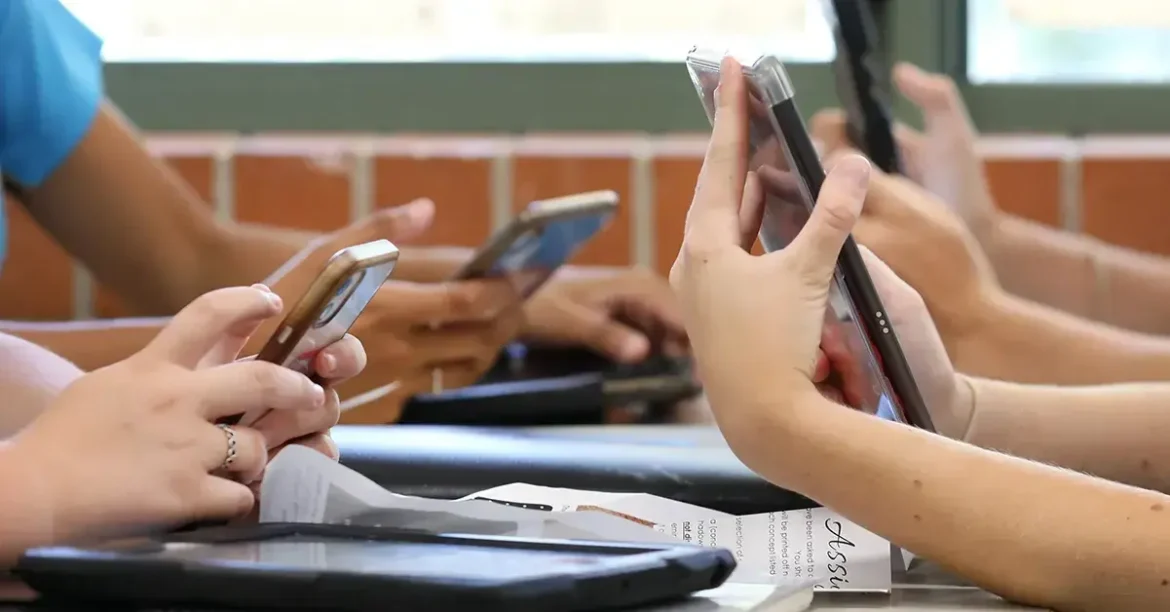
On Tuesday Jan. 20, the new “Off and Away” Cell Phone Policy was introduced to NCHS. The guidelines, in effect from bell to bell, require phones, smartwatches, and headphones to be powered down and stored away during the school day, with limited exceptions. This is the first step toward a fully phone-free environment for the 2026-27 school year.
Under the policy, device use is permitted in approved zones such as the cafeteria and the library, spaces intended to prioritize connection and collaboration. In classrooms, teachers may allow devices for specific lessons, clearly signaling when those instructional windows begin and end. Outside of these moments, phones are expected to remain off and in backpacks.
For many students, this change has been jarring. We’re used to walking around the hallways with phones in hand, and now we’re left navigating the five minutes of passing time without them. It raises an important question of autonomy. For many students, phones are tools where we’re able to make independent choices throughout the day – checking schedules, responding to friends’ messages about where to grab lunch in town, or taking a short mental break between classes. Being required to have our phones in our backpacks can feel frustrating now simply because of the restriction itself, but because it removes a sense of control over how we manage our time and stress.
Still, as frustrating as it may be to not have these small conveniences anymore, NCHS is far from alone in making this decision. As of October 2025, 31 states and the District of Columbia had required districts to limit or ban cell phone use in K–12 classrooms.
While the new expectations have been met with mixed reactions, the motivation behind this policy is not difficult to understand. For teachers, constant cell phone use makes it difficult to maintain students’ attention – as they become distracted by recurring notifications. So, it makes sense that limiting phone usage would help address this problem. According to Paragon Health Institute, in schools that have implemented phone restrictions, educators describe a renewed sense of instructional freedom, more time spent teaching, and less time policing devices. Students also report relief from constant notification pressure, noting greater concentration and increased face-to-face interaction.
Additionally, as teen mental health has become a topic of growing national attention, concerns about distraction from phone use are increasingly linked to concerns about student anxiety. Studies from the Columbia Department of Psychiatry have shown a correlation between heavy social media use and depression, anxiety, loneliness and suicidal ideation. But even as students recognize the toll it can take on their well-being, most still reach for their phones out of habit, or even as a coping mechanism. Taken together, these concerns emphasize how phone restrictions are really a part of a larger conversation about overall student wellbeing.
The reality is that this policy is now part of daily life at NCHS. As the student body adjusts, the challenge moving forward will be about finding a balance between protecting mental health and learning potential while recognizing our need for agency and voice.