

Valentina Fuentes, Reporter
@valentfcourant
The NCHS administration has implemented several changes to the June 2025 final exam schedule, based on feedback from faculty, students, and parents that arose after January’s midterms. The most notable adjustments involve introducing more flexible instructional time as well as promoting student wellness, according to Principal William Egan.
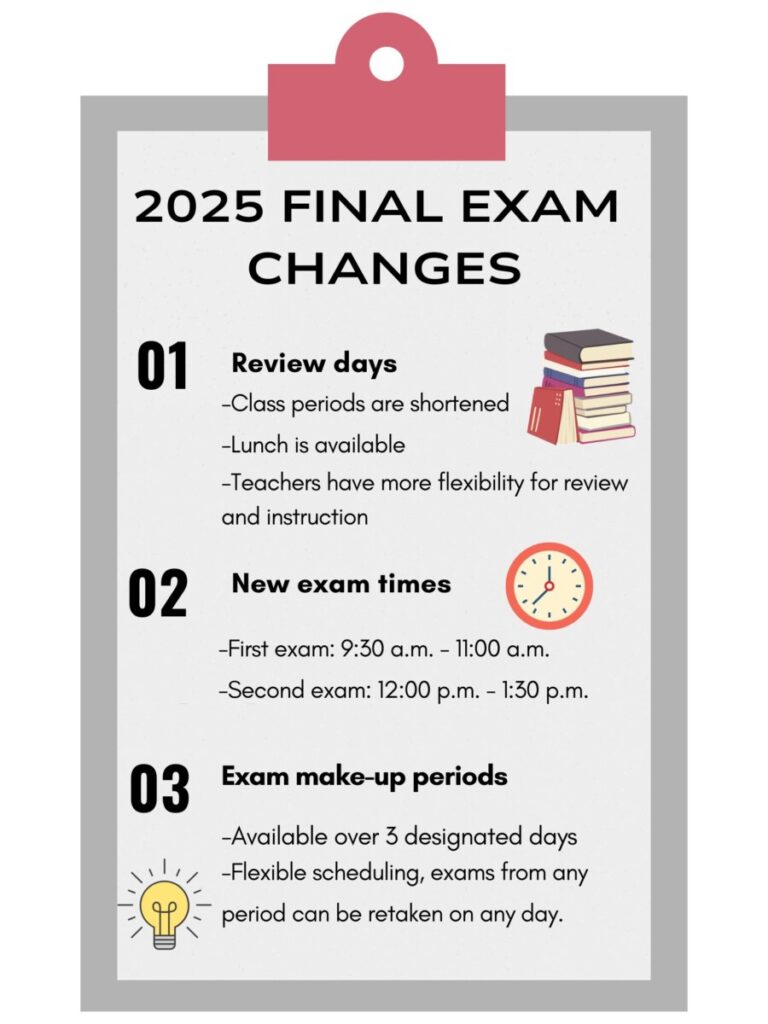
The updated schedule introduces restructured review days following an early release format. Exams will run from 8:00 a.m. to 12:00 p.m., with instructional time focused on preparation for exams periods one through four on the first review day and periods five through eight on the second. Along with this, review days will also offer lunch to students from 12:00 to 1:00 p.m., and will also be followed with optional extra help from teachers between 12:30 and 2:30 p.m. to optimize preparation and flexibility for NCHS students.
On exam days, the first exam will take place from 9:30 to 11:00 a.m., and the second exam will be from 12:00 to 1:30 p.m., a shift from previous years giving students an extra hour and 15 minutes in the morning. This will provide more structure, balance, and a window for either study time or opportunity for more sleep. Additionally, makeup exams are now available in a three day window during which students can retake an exam from any period.
The idea for a revised schedule started when biology teacher Jessica Zych launched a faculty survey after hearing some concerns from colleagues about the midterm exam process, and what would be of the upcoming finals. “There was feedback from the faculty during meetings that it took too long to get through exams and that there was too big of an interruption in instruction,” Ms. Zych explained. “It was essentially two weeks or more of actual exam time.”
The survey asked faculty members about several aspects of the finals schedule, including whether the two-week timeline increased student stress or alleviated it by allowing more time for preparation. It also included questions about the amount of instructional time between students and teachers.
One of the issues that the changes addressed was the goal to balance instructional time for each semester. “Courses that are only second semester courses where teachers, particularly of AP classes, were indicating they were getting through fewer units because of the disparity in the instructional days,” she said.
In addition to the faculty survey distributed by Ms. Zych, Principal William Egan sent out surveys to students and parents to gather input from the entire school community. He wanted to make sure that the new schedule reflected a shared desire for improvements.
“We’ve spent years working on student wellness. When we transitioned to the block schedule, that was about student wellness. When we created our original exam schedule, that was about student wellness,” he said. “We purposely ask for feedback because we want to improve the overall experience for the entire community.”
Principal Egan stressed the importance of community collaboration in shaping the new plan. “The parents’ voices matter. The kids’ voice matters, and the staff’s voice matters,” he said. “Everybody had a voice, everybody had a say, and we then went back to department chairs, shared with them the survey, then went back to the staff, shared it with them, and then shared it with the broader community.”
The survey results showed strong support for change. According to the data, 85 percent of faculty, 74 percent of students, and 81 percent of parents preferred ending exams before the long weekend. “There were definitely strong opinions. There was an overwhelming response to having the exams not stretch over the weekend,” said Ms. Zych.
Along with concerns about the length of exams, many students expressed that having a regular schedule review day between exams that start also added on stress and diminished flexibility for individual studying and meeting with teachers. They also expressed that ending later for exams disturbed people’s schedules.
“Unbeknownst to us, the exam days were adding on to stress. People would have a full day, maybe a half hour break, then practice or games, get home at nine, and then have to study and take an exam the next morning,” Principal Egan said.
This change gives students more flexibility in how they study and manage their time. It also helps teachers finish course material more consistently, particularly in classes that rely on every available day.
Principal Egan emphasized that while exams will always come with some level of pressure, the overall goal of the change is to give students the best chance to succeed. “Stress doesn’t go away… But what you want to do is optimize the conditions for success for students” Egan said. That’s really all we’re ever trying to do. Make the student experience the best it can possibly be so you can all perform at your best.”