
Abby Dunlap, Reporter
It’s impossible to walk down the NCHS hallway without seeing people’s faces angled down, distracted by their phones. Scrolling, texting, snapping, and viewing, the world is constantly connected through these five by three inch screens. To many adults who weren’t exposed to such devices at a young age, mindless scrolling is all they see when a teen leaves class and whips out their iphone. However, a high school student sees so much more. Their iphone is their way of communication and self expression. Human interaction isn’t just talking to your peers anymore, but has become texting, sending memes or videos, emojis, commenting, likes, shares, etc.
Many Gen Z and Gen Alpha brains have grown accustomed to and even reliant on technology to constantly solve our problems, as opposed to traditional brain growth of learning to solve one’s problems by themselves. This argument has developed into a worldwide debate between governments, parents of teens, and teens themselves, and the solution remains uncertain.
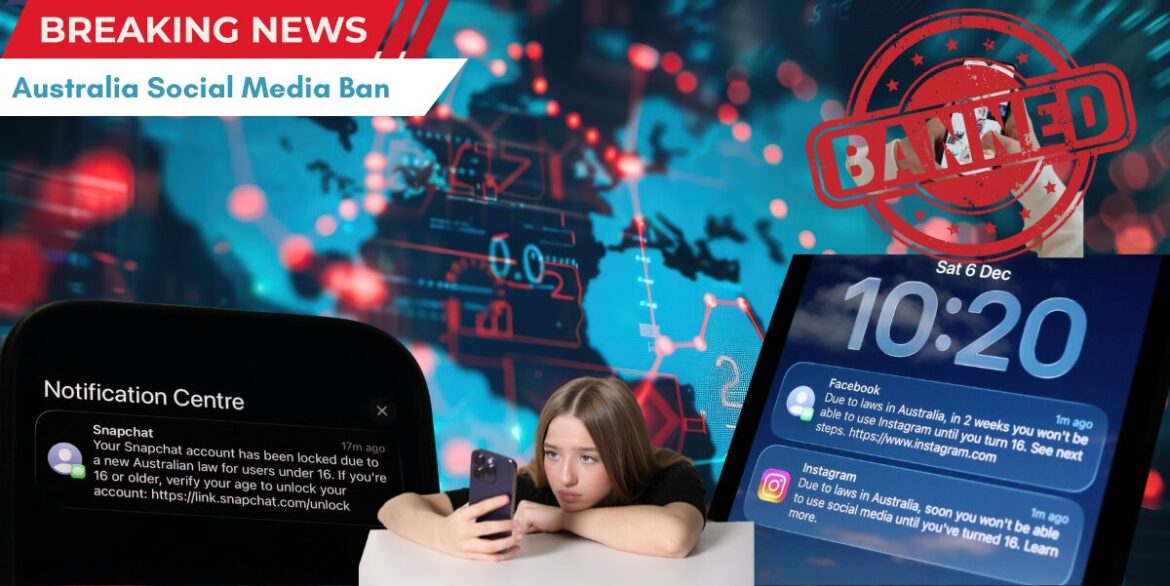
One solution that has been put into action originally in Australia is a government enforced law prohibiting anyone below the age of 16 to have any form of social media. This includes Snapchat, X, Instagram, Youtube, Twitch, and TikTok. The ban was intended to protect children’s mental health from addictive algorithms, cyberbullying, harmful content, and online predators, citing links to increased anxiety, depression, and poor self-esteem. All of these are growing and relevant issues in the digital world that many have been victim to.
This movement has spread worldwide, reaching current debates in the UK, France, Denmark, Malaysia, and Norway. Currently, eight states (Arkansas, California, Florida, Georgia, Louisiana, Mississippi, Ohio, and Tennessee) have enacted legislation that either bans minors from obtaining social media accounts outright and/or requires minors of certain ages to obtain parental consent in order to open accounts.
The big question is so what? What is wrong with restricting these supposedly bad sites?
While I agree that digital media usage has its drawbacks and a solution needs to be put in place to combat the growing addictions for it, putting in place direct laws against its usage is outright unconstitutional. Denying these minors’ social media isn’t just taking away their snap streaks, it is taking away freedom, from both them and their parents. One of the biggest ideas of the 21st century in many modern countries is that people have certain liberties to speech, religion, movement, etc. High School students have a right to exercise said liberties, especially the freedom of speech.
Considering that social media is one of the main ways of communication and connection in current times, taking away these platforms means important forms of communication are being stripped from thousands of teens. Without social media, they are left with feelings of disconnection.
The Australian government took a poll and 70% said that the ban was “not a good idea”. This relates to the temporary TikTok ban in the U.S. in 2023 where 50% of American users reported opposition to it, and 68% of users worldwide also reported being against it. People are pushing back against the strict laws, and for a good reason. It isn’t the government’s place to deny teens their digital freedom.
Instead of restrictions, politicians should be helping their countries to make the right choices through public awareness campaigns. Youth usage of vapes dropped by half a million people in 2024 strictly due to the awareness campaigns put in use by the US Government. If these campaigns were effective in stopping the usage of e-cigarettes, then they could also stop digital media over-usage while still allowing adolescents the rights to social media they deserve.