
Leah Granskog, Reporter
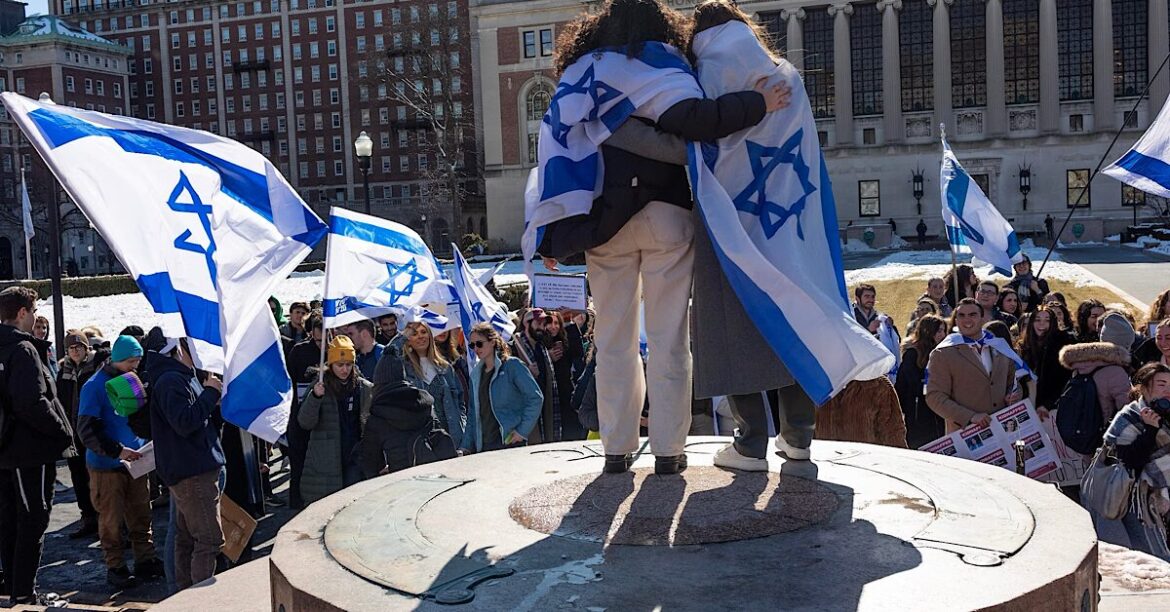
Featured Image by ABC News
To many high school students, college holds the promise of independence, new friendships, learning experiences and opportunities for self-discovery. So, in an attempt to attract students, colleges embrace these perceptions.
Their websites advertise beautiful quads and academic buildings. Their tours proudly highlight engaging classes, showcase large libraries filled with books and promote a seemingly never-ending list of clubs and sports. They present their campuses as the perfect next steps for a student’s academic journey. However, there are realities that don’t appear on college brochures or campus tours.
On October 10th, 2023, a Stanford professor was suspended after allegedly forcing Jewish students in his classes to stand in a corner while he called them “colonizers” during a discussion about the Israel-Hamas conflict.
On October 25th, 2023, at the library at Cooper Union in New York, Jewish students within were disrupted by protesters banging on the windows and shouting “Free Palestine.” In order to leave safely, they had to be escorted by the NYPD.
On September 27th, 2024, at the University of Pittsburgh, a Jewish student, who was wearing a Star of David necklace, was assaulted.
Unfortunately, these examples represent only a fraction of the many antisemitic assaults, protests, and vandalism incidents that have been occurring across college campuses. An especially frightening surge occurred after October 7th, 2023, when militants from Gaza, led by Hamas, attacked Israel, killing at least 1,195 civilians and taking 251 people hostage. According to CNN, antisemitic incidents on college campuses increased by 84% between 2023 and 2024, faster than in any other setting. So, as many Jewish high school students start to research and tour colleges, among their searches for a college’s extracurriculars and major offerings is often a search for the university’s antisemitic history.

Graphic by Alex Leeds Matthews, CNN
Preserving Judaic Identities
Recently, many Jewish students on college campuses have reported becoming targets of harassment or violence. According to the American Jewish Committee (AJC), 35% of current American Jewish college students report having personally experienced antisemitism at least once during their time on campus.
This rise in antisemitism since October 7th has made it difficult for some high school students to decide where they want to attend college, including Junior Bea Merritt. “Seeing some of these schools and seeing these antisemitic issues not being addressed in a way that would make people feel safe definitely has an impact on me,” Bea said. “Why would I go there if I’m not going to feel safe?”
I found myself asking this question, too. How can a Jewish college student thrive on campus if more than three in ten Jewish college students claim they avoid wearing, carrying, or displaying things that would identify them as Jewish? How can college students feel comfortable if more than three out of five Jewish college students report having experienced or seen an antisemitic incident?
Several experts say students cannot thrive academically in such environments. “Students who feel threatened cannot learn,” said Laura Frank, the Education Advocacy Director for the Atlanta Journal-Constitution.
However, a student does not have to be on the receiving end of a threat to be affected by a threatening environment. School Counselor Sara Drexel believes that a college’s “campus culture,” which is defined as the values and behaviors that determine a college’s environment, is important to students as they decide what college to attend. “Beyond academics, students want to know if they will feel a sense of belonging and safety in their environment,” she said. “The social climate, the tone set by faculty and staff, and the presence, or absence, of activism shape how students imagine their day-to-day life on campus.”
The Importance of Being Aware
When it comes to a college’s campus culture, misinformation often plays a role in fueling antisemitic beliefs. According to the Ohio Senate’s report on a nationwide survey, 1 in 6 college students find the death toll of the Holocaust not believable or exaggerated. Additionally, the Anti-Defamation League (ADL), an organization that fights antisemitism and hate crimes, found that many anti-Israel activists believe that in their attacks on Israel, Hamas committed no acts of sexual assault, killed no civilians, and treated hostages well. While everyone is allowed to express their opinions, it is crucial to acknowledge that some opinions could be founded on misinformation rather than facts, which can differentiate an argument from naivety.
This spread of misinformation is partly due to the lack of education about antisemitism, in high school just as much as in college. Ms. Drexel believes it to be important for students to be educated about antisemitism in high school. “Learning about these issues supports the values our community already prioritizes – respect, compassion and a commitment to ensuring all students feel safe,” she said. “Providing opportunities for students to learn about antisemitism helps them develop awareness and confidence as they prepare to enter diverse college campuses and the wider world.”
Bea agrees that all students, regardless of their religious affiliation, should be aware of these issues. “As high schoolers, I think there’s a lot of pressure to start learning about things that are going on in the world,” Bea said. “I know it can be stressful to hear about so many sad things, but I think that antisemitism has become a big enough issue that it should be known.”
However, history teacher Amy Rothschild also thinks that many NCHS students are not exceedingly aware of this rise in antisemitism. “Unfortunately, my thinking is that children are not as tuned into current events,” she said. “If there were a major event at a college campus, then perhaps this would be something that students are aware of. But as a general feeling, they aren’t.”
Along with this, Ms. Drexel also acknowledged that many students, especially those at NCHS, often hold a university’s prestige above its campus culture. “Students often research academic programs thoroughly but sometimes overlook campus climate,” she said. “However, understanding how a school handles incidents, supports marginalized communities, and fosters inclusion is equally important.”
Free Speech vs. Antisemitic Behavior
This rise in antisemitism raises the question that many controversial issues, like the Israel-Hamas conflict, force us to ask: at what point does free speech cross the line into discriminatory or unlawful behavior? According to the Supreme Court, categories of unprotected speech include incitement to imminent lawless action, true threats and targeted harassment.
A misconception is that pro-Palestine protests and other anti-Israel campaigns are considered antisemitic incidents. However, legitimate political protest, support for Palestinian rights, or expressions of opposition to Israeli policies are not considered antisemitism. For example, the encampments and pro-Palestinian protests that have been occurring on hundreds of college campuses are protected under the First Amendment as long as they remain peaceful. No matter how offensive and frightening they may be for Jewish students, it is only when they become violent or induce harassment that they are considered unlawful behavior.
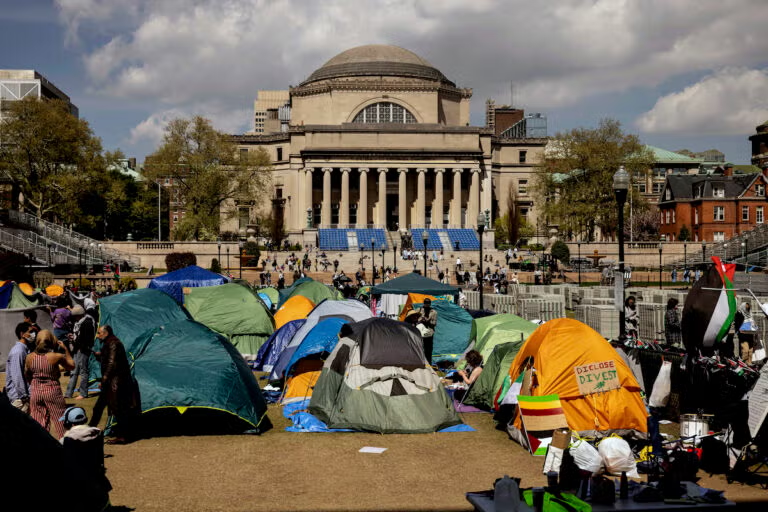
Photo by CNN
Nevertheless, pro-Palestinian and antisemitic incidents often appear alongside each other. “The problem is that a lot of the people who are anti-Zionists have taken their beliefs and use them to be antisemitic,” Bea said.
Ms. Rothschild agrees. “I think there’s been a problem with people defining antisemitism and co-opting that with anti-Palestinian sentiment,” she said. “So, I think the idea that many people might be against what happened in Israel on October 7th is translated into an antisemitic feeling.”
Whether it be protected under the First Amendment or not, there is a difference between voicing an opinion and deliberately trying to cause harm to others. Oren Segal is the Senior Vice President for the ADL. In the ADL’s news briefing that took place in April of this year, where ADL leaders presented an annual report of antisemitism in the U.S., he said, “If your idea of protesting Israeli government policies is to assault or harass or intimidate Jews, that doesn’t make you a political activist, that makes you a bigot.”
Final Thoughts
While everyone deserves the right to be heard, everyone also deserves the right to feel safe. We need to find a balance between protecting the free speech rights our Constitution guarantees while also preserving the religious, ethnic, and cultural diversity of our college campuses. Jewish students should feel comfortable joining Hillel. They should be proud to wear a Star of David. They should be excited to share their culture and views about Israel with others. Every student, Jewish or not, deserves the basic right of feeling safe and respected, no matter which university they decide to attend.